Enjoy Your Little Kids

11 Survival Tips from a Home-school Mom of 7

Jane Flannery
Home-school Mom of 7
flanneryjane@hotmail.com

Schools are closed, and the panic of even thinking about taking on home-schooling your kids has set in. So I asked a long time home-school pro, Flannery Salkeld, mom of seven to share some survival tips with us so we can actually enjoy our little kids during this extra trying time.

A quick perspective change

Before we dive right in to the 11 tips here are two really, REALLY important perspective switches Brett, Flannery’s husband, suggests:

  1. Realize that most days you can probably get the content you’d get in a school day in about 2 hours, though that number is a little higher in the higher grades. So don’t worry about keeping them busy for 7 hours a day.
  2. Everything you do is education. Don’t panic about the curriculum. Enjoy your kids and work on them enjoying their time together and with you. That is priority number one. That will pay dividends for years. Your kids aren’t going to end up adults not knowing the ONE IMPORTANT THING that everyone was supposed to learn in grade whatever.

And remember, this is a great opportunity to get to know your kids better.

When COVID-19 is over, you have succeeded if you have done that.

Make that your goal!

11 Tips For A Home-schooling Newbie
1. Structure

Map out a structure or routine for the day. Keep it simple and incorporate things like meal and snack times (more on that later), outside time, higher and lower-key activities (including naps if applicable), tidy up times, and books or audiobooks.

Having a routine shifts responsibility from you to the routine. When your kids are resistant, hang on to your vision of the routine but at the same time expect things to be bumpy at first. Remember, everyone needs time to adjust.

Pro Tips:

  • Save screen time for when you need it most (more on that later).
  • Consider your and your kids’ times of naturally higher and lower energy when planning.
    • Sandwich pleasant and less pleasant activities.
      • For example, if your kids are reluctant to go outside, you could say “It’s outside time and then hot chocolate time.” (It’s not a bribe, it’s just on the schedule!)

Here is an idea of what you COULD include when mapping out a routine for your kids:

Keep in mind:

  1. Start building your schedule off of what is already going well, or working day to day.
  2. You don’t need to have every 30 minutes of the day planned.
  3. Follow the natural rhythm of the day with your kids, and pivot when they need something fresh to focus on.
  4. Build moments of connection early on in the day and throughout the day. More on this below.
  5. If your mind is swirling with all the things you “should” do and teach your kids, choose one! More on keeping it simple and dealing with the “shoulds” below.

2. Connect early in the day

Try to connect with your little kids early in the day with a small amount of focused attention. Great examples of this are reading a book or playing a short game.

They will be less likely to be clingy or whiny when you have to get things done.

Why?

Because you’ve invested time in connecting with them, reaffirming that bond and love.

This same idea can work when you are trying to get your kids to play independently. You can sit down with them and play for a few minutes to help them get engaged, and then drift away.

3. Simplify

A calm and uncluttered environment will make it way easier for you to do your routine and feel good at home.

Step back and envision the flow of the day that you have planned, the activities, the meals.

Ask yourself:

  • Is everything accessible?
  • What’s in the way?
  • What’s overwhelming?

Pro tips:

  • Boxing up things and storing them out of the way.
    • You don’t have to worry about whether you will be getting rid of anything permanently at this point. Just clear away things that are stressing you out and getting in the way of a peaceful home life.
      • Include:  Anything you aren’t using now, excess supplies and toys, and even excess clothes.
  • Consider rotating toys
    • Having too many decisions to make is overwhelming, especially for kids.
      • It’s easier for kids to focus if they have fewer toy options.
      • They will play better and for longer periods at a time.

A good book on this topic is:
Simplicity Parenting by Kim John Payne.

There is a special audio series at simplicityparenting.com in response to today’s situation.

4. Meals and Snacks

Keep meals and snacks really simple and try to plan ahead.

We do breakfast, lunch, afternoon snack, supper, and maybe a very small evening snack. They are at around the same times every day. If your kids get up early they may need a morning snack. Have water available in fun cups if it isn’t time to eat yet.

When it’s time to eat, feel free to only offer what you are comfortable with them having. Again, limit options.

I am happy to share my meal and snack ideas on request. I could go on, but instead I will recommend a great article by my Registered Dietitian friend Lacey Engel, called “How Do I Stop My Kid Asking for SNACKS All Day?”

5. Screen time

As much as you can, try to save screen time for later in the day and times when you most need it.

For example:

  • When making supper, or meals.
  • Trying to get work done where you can’t be interrupted.
  • When your energy is particularly low.

I struggle with screen time getting out of control when I am stressed out; however, using the screen too much always backfires. The kids are whinier and don’t play as well!

Pro tips:

  • Think about what your personal criteria is for what your kids watch and have some ideas for options you are OK with.
  • To keep my stress low and the atmosphere pleasant, I try to pick audiobooks, kids’ shows and nature documentaries that I personally enjoy or at least don’t mind!

Need some more ideas on keeping kids entertained? Check out this post, What to do with kids when you’re stuck at home – The Ultimate Guide.

6. Social Media

You might find you need to make a screen time schedule for yourself, too. Especially nowadays with new information coming in all the time about the pandemic. The news and social media can be extremely distracting.

Pro tip:

  • You might want to practice “social media distancing”
    • Set certain times or a certain number of times per day that you will check in.
    • This allows you to stay present in your day the rest of the time.

7. Perspective

These last few tips are mostly about your mental game. When you feel stressed or overwhelmed, try to observe your situation without judgment.

Pro tips:

  • Mentally step back and take a bird’s eye view of your day and of your problem.
  • Brainstorm how to solve problems and alleviate pain points.
    • Since you can’t do everything, choose where to cut corners.
  •  Pick your battles and figure things out gradually.
    • You don’t have to respond to every misbehaviour right away.

8. Juggling is an art form

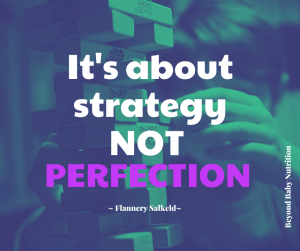
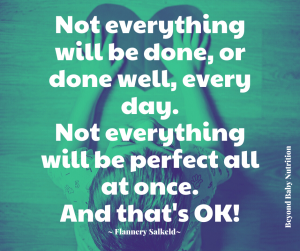
Not everything will be done – or done well – every day. Not everything will be perfect all at once.

For example:

I might make my kids a great lunch and congratulate myself on the enriching preschool activities I provided that morning.

BUT…. Realize I have eaten and drank nothing and have forgotten to make an important phone call.

I am dressed and all ready for the day. Have precooked a bunch of chicken and made soup. The baby is napping for an extra-long time.

BUT…. I look up and realize that the twins are on their second hour of Ben and Holly’s Little Kingdom.

The more purposefully you can juggle, the more peaceful and in control you will feel!

I can walk by a particular mess and say to myself, “Not now. That will get cleaned up at clean-up time.”

I’ve experienced that it is possible for me to spend literally all day in the kitchen, or all day trying to clean up, if I don’t intentionally structure how I will spend my time.

9. Eliminate “should”

I think that “should” is almost never a helpful word.

Listen to your thoughts. If you hear “should,” try to replace the word with something more specific to see what you actually mean by “should.”

For example:

“I should be dressed by now”

Could mean….

“I would feel better about myself and more energetic if I were dressed.”

In this case, you might decide to prioritize getting dressed because you want to take care of yourself.

Or it could mean…

“If my neighbour sees me, I worry she will judge me for not being dressed.”

In this case, you might just say “Pffft” and not worry about it any more.

10. Notice the positive

There will be both predictable and unexpected benefits of having your whole family staying home together.

Looking for all of the benefits and commenting on them out loud to your kids will help everyone’s outlook! You can notice more time to sleep in, the option to eat peanut butter, to reheat leftovers for lunch, to not have to rush out the door.

Pro tips:

  • Talk up how lucky you all are to get the chance to spend more time together.
  • Interpret and explain situations to your kids on how their energy and actions are being helpful, or could be used.
    • “Look! She’s smiling because she hears your voice and is excited you are here!”
    • “He’s crying; how can we help him?”
    • “Wow, you are a great big brother; he really loves when you play with him!”
    • “Look, he wants be like you! Can you show him how to do it?”
    • “She will learn to talk by listening to us!”
    • “I need your help. Can you please bring a diaper from over there? She needs a new one.”

You get to create the atmosphere in your home!
11. If Mama Ain’t Happy…

Finally, paying attention to your needs and preferences wherever you can is great for you and great for your kids.

They’ll learn from your example and, overall, they will be happy if you are happy.

Ask yourself:

  • What do you need to do in the morning to feel ready for the day?
    • If you are not used to staying home, consider what kind of clothes you enjoy wearing that are comfortable and practical for your new situation.
  • What really bothers YOU and is worth your attention?
    • For example, if you can’t handle whining, but don’t care if the kids jump on your couch, spend your energy training them not to whine.
  • What kind of a break do you need to recharge?
    • Read or listen to a podcast by yourself?
    • Talk on the phone with a friend?
    • Leave the house?
    • Be alone in the house?
    • Have music on in the background, or silence?
  • What are you interested in doing with the kids?
    • If you like having kids “help” you in the kitchen, do it. If the idea makes you want to scream and run away, don’t do it.
    • Choose something else that is more sustainable for you.

It’s a challenging time right now, and there are so many great choices you can make for your kids. It’s perfectly fine to pick the ones that suit YOU.


I hope these suggestions help give you the space to enjoy your extra time with your children!

Feel free to comment if you have questions or want more examples for any of the points I mentioned. If you want to get in touch with me directly, you can email me at flanneryjane@hotmail.com

Jane Flannery
Home-school Mom of 7
flanneryjane@hotmail.com

Feed fear? Or find hope?

Blog provided by: Melanie Boldt
Owner of Pine View Farms.


Over the past few days, we have been bombarded with Covid-19 information. I fear we may have two outbreaks going on — a fear pandemic and a flu pandemic. Oh yes, there might be a third — a misinformation pandemic.

In these times of uncertainty, it’s critical we keep our wits about us, lest we worry ourselves sick — and I mean that quite literally.

So I ask myself hourly, “what is within my control?” The answer? Our reaction is 100% within our control.

In marketing and advertising, I know that two things sell products best: fear and sex.

At Pine View Farms, we have deliberately steered away from fear-based selling. Rather we talk about moving towards better things. And as for sex? Well, neither Kevin nor I are that sexy and somehow, I think that strategy would scare y’all away! Not a good strategy at all!

As humans, we are innately wired to respond very quickly to fear. Our fight or flight response saved our butts as Neanderthals.

We are hardwired for negativity. It’s called negativity bias. “Bad” things grab our attention and they tend to influence our decision making more than “good” things of equal magnitude.

Our brains perceive negative news as more truthful, drawing more attention and hence, having greater validity. Now we know why fake news runs rampant and has become a slick tool of nefarious politicians.

Covid-19 is the latest opportunity to feed fear to the masses. Now more than ever, the diet you consume every day — what you eat, read and watch matters.

(Writing is cathartic for me, and so be aware, I’m preaching to myself here.)

I’m not gonna lie. For the past week, I have vacillated between gut wrenching panic and heroic stoicism every hour, depending on where my mind dwells.

As a business owner, I feel the weight of responsibility for our staff’s health and economic stability. I feel scared for our farm’s economic future. Everything is on the line here and we have no safety net. And, we want to care generously for our parents, children and surrounding community.

Neuropsychologist Rick Hanson, author of Hardwiring Happiness: The New Brain Science of Contentment, Calm and Confidence says “The longer the neurons [brain cells] fire, the more of them that fire, and the more intensely they fire, the more they’re going to wire that inner strength – that happiness, gratitude, feeling confident, feeling successful, feeling loved and lovable.”

But on a daily basis, most of us dwell more on the negative than the positive. We need five times more positive interactions than negative reactions to thrive as a species! Those feel hard to come by these days.

So, what can we do?

  • In all things, remember that our reaction to events is ONE HUNDRED PERCENT within our control. We cannot control much in this life, but our personal reaction is a big one. Keep your head screwed on!
  • Don’t fall prey to the 24-hour news cycle. Find trusted, reliable news sources, get good science, and turn off the TV and/or put down your phone. Otherwise, you are feeding fear and soon your stomach will be churning like mad.
  • Nurture your mind, body and spirit. Do the things you always do to stay healthy. Eat well. Sleep well. Exercise. Get outside in nature. Meditate or pray. Find connection and community. These are the things that build resilience in your body and brain and will enable you to fend off sickness if, and when, it comes.
  • Feed your brain daily goodness. Be present in the moment. Breathe deeply. Try to affirm the positive moments you experience every day. Start a gratitude list. You will find joy.

There is one last thing I need to ask of you. You might think it’s self-serving, but this isn’t just about us. Wherever you can, support locally owned small businesses for your purchases. Now more than ever, it’s critical to have local production and supply chains for essential items like food, so that we have the economic resilience and capacity to take care of ourselves. We believe a creative, robust, local economy is critical to our recovery.

I remain resolute in hope — does that make me crazy? Maybe. Is it possible that that through this pandemic, we might realize that all of humanity is connected on this little ball of a planet, and that now more than ever, we need to work together and be very, very kind to one another? That would be the best thing ever.

No matter how you’re feeling this week, those emotions are valid. Let’s be cautious and calm, .Let’s be gracious to our neighbours, especially those who are vulnerable. Let’s find hope.

Blog provided by: Melanie Boldt
Owner of Pine View Farms.


Menu March 28 – April 4 2020

Check out the delicious ZestyKits recipes this week. All ZestyKits meal kits are build by hand in Regina, SK, They feature many delicious products made and grown here in  Saskatchewan. Get your kitchen and your taste buds ready. It’s about to get Zesty!

Order by

Thusday Mach 26, 11:59pm

Menu Availability
braized lentils and sausage
Italian sausage beet braised lentils
with celery, onion, bay leaf & dill
 
 
curry
Creamy chicken curry
with carrot, creamy curry coconut sauce and brown rice
 
Copy of Untitled
Beef sirloin, orange & lentils
with french lentils, kale, eggplant, beet, pumpkin seeds and Saskatoon berry & cherry balsamic dressing

Clean Food

braized lentils and sausage
Italian sausage beet braised lentils
 
with celery, onion, bay leaf & dill
 
 
curry
Creamy chicken curry
 
with carrot, creamy curry coconut sauce and brown rice
 
IMG_9713
Eggplant, Orange & lentils
with brown rice, beets, sweet potatoes, onion, kale, mixed sprouts & maple balsamic dressing

Plant Based & Vegan

braized lentils
Braised Beet Lentils
with celery, onion, bay leaf & dill
 
 
curry
Creamy pinto beans curry
with carrot, creamy curry coconut sauce and brown rice
 
IMG_9713
Eggplant, Orange & lentils
with lentils, kale, eggplant, beet, pumpkin seeds and Saskatoon berry & cherry balsamic dressing

Pantry Essentials

Many restaurants are now closed and with most of us now working remotely, cooking at home is more important than ever. This blog includes the following:

  • Steps to stock up on non-perishables
  • Pantry essentials 
  • Ideas to use pantry essentials
  • Shelf-life guidelines

The Centre for Disease Control and prevention (CDC) recommends having a minimum two week supply of food at home.

Preparing a pantry to last a minimum of two weeks is not an easy task for many, especially for new cooks and those on restrictive diets. This blog provides the tools to ensure your pantry is well stocked and provides you the inspiration to cook with pantry ingredients.

How to stock up on non-perishable in an effective way

Take inventory of what you have

Begin by looking at what is currently in your pantry, fridge & freezer. Use our PANTRY GUIDE to note anything running low in your pantry

Make sure you have the basics

Some basics are essential to cook virtually anything. These include: oil, vinegar, dry herbs and spices, salt and flour.

Make a meal plan

Shopping for self-isolation does not mean ditching healthy eating. Try to stay away from highly processed foods which can be very tempting during stressful situations. Having a meal plan of how to use your food is a good way to continue to eat whole foods and avoid processed foods. Take 10 minutes to write down a few meals you would like to make in the next 2 weeks. Would you like some freezer meals? If you have any family favourites, you can make a larger batch and freeze them for a few meals. Do you have frozen chicken for that chicken pot pie? Do you have ground beef for that spaghetti meatballs? Ensure to go through the recipes and add any required ingredients to your list. 

Talk with loved ones

If you are starting to feel overwhelmed, remember we are all in this together and we are stronger together. Call your friends and family. If you don’t have ideas of recipes to freeze or make with pantry items, ask your loved ones for inspiration. We are also providing a list of freezer recipes and recipes made with pantry ingredients. If you have extra frozen meals, consider sharing them with loved ones who need a hand. 

Space and Financial Budget

Determine how much space and money you have available to stock your pantry.

Pantry Essential - The Ultimate Guide

How can pantry essentials be used?

Grains & Flour
  • Grains make an amazing side dish. Think: Rice pilaf and quinoa salad. They can also be central to dishes like with paella or vietnamese noodle bowls.
  • Flour is fundamental to many comforting staples: breads, pizza, cake, muffins, cookies, pie, dumplings, and many others.
Dried Fruits
  • Combined with nuts dried fruits make a good snack.
  • Add them to granola, chia puddings or overnight oats for bursts of flavours.
Nuts & Seeds
  • Add them to granola or top oats.
  • Use as topping on salads.
  • Combine with fresh or dried fruits for a snack.
Legumes & Beans
  • Legumes and beans are can be used to make chili, hummus, salads, tacos.
  • Cooked legumes can also be lightly oiled, salted and toasted for a delicious and nutritious snack. 
Oils & Vinegars
  • Oils are an essential to pan frying or roasting vegetables.
  • Combine oil, vinegar and spices to create delicious salad dressing.
Herbs & Spices
  • Is essential to create almost all comfort dishes from bolognese, chili to chicken pot pie. 
  • Use them to easily transform the flavour of a casserole, stew or soup.
Freezer
  • Frozen meats can be used in a variety of dishes: bolognese sauce, chili, chicken pot pie, beef stew, fish stew, cabbage rolls, and many others.
  • Frozen fruits can be used to make smoothies or to add to oatmeals and muffins.
  • Frozen vegetables can be added to tons of dishes.
Produces
  • Root vegetables can be used to make a variety of dishes including: Mashed potatoes, cabbage rolls, borscht soup, beef stew, chili, or as a side dish roasted at 400F for 20 minutes lightly oil and salted.
  •  
Baking

It is comforting to incorporate a few indulgent foods, like chocolates or other sweets to pantry essentials – especially during stressful times. Ensure to not overindulge by eating mindfully. 

  • Delicious bakings include: cakes, cookies, pies, cinnamon buns, brownies, and many others. 

What's the shelf-life of common pantry items?

The estimates provided estimates. Read all information on packaging regarding expiration and “use by” dates, and how long the item is safe to consume after opening. If a date on a package differs from the dates listed, rely on the package.

Use your senses of sight and smell to be sure food is safe to eat. Even if it says it’s within the expiration date periods, if it smells or looks funny throw it out! Remember that “best before” dates do not mean “bad after”. Use your senses and judgement to minimize food waste.

Must be Unopened

Estimated Shelf-Life

Potatoes

3-5 weeks

Coffee - Whole beans

6-8 months

Nuts

8 months

Sauces & condiments

1 year

Chocolate chips

1 year

Brown rice

1 year

Cans

1 year

All Purpose Flour

1 year

Legumes & Beans

18 months

Oil

1 - 2 years

Cocoa powder

2 years

Baking soda

2 year

Sugar

2 years

Dry pasta

2 years

Salt

indefinite

Vinegar

indefinite

Community Support

Stronger Together

Latest Blogs

All Community Blogs

It seems we can't find what you're looking for.

What to do with kids when you’re stuck at home – The Ultimate Guide

Blog provided by:
Lacey Engel, Registered Dietitian 
BSc. Nutrition, BSc. Kinesiology.
Owner of Beyond Baby Nutrition

The current COVID-19 pandemic is wild to say the least. One minute you’re planning birthday parties, St. Patrick’s Day festivities, Easter feasts, and going on vacations, and in the next minute school is cancelled and you’re being told to “social isolate.” You’re overwhelmed, anxious, and uncertain of what’s to come to say the least; and you’re definitely not alone in those feelings. 


One of the major concerns I keep hearing from parents is “what the heck am I going to do with my kids?” It’s totally understandable if the idea of having to stay home leaves you feeling a little… or a lot overwhelmed. For many families, this may be the first time kids are all at home for an extended period of time without major travel plans or celebrations involved.


So I scoured the internet and found some pretty incredible resources to share with you to help you have fun as a family, take some extra stress off you, and provide some much needed distraction.

And hey, when the world gives you COVID-19, you could always turn it into a second Christmas!! Being stuck at home with your kids may not sound like a dream, but with a little perspective shift social isolation can easily be changed into a family, fun stay-cation (or at least we can try to pretend, right?!)

Let's plan your stay-cation!

It’s no secret that kids thrive with routine. But, and this is a BIG BUT….. if it takes you some time to carve out a new routine for your family that’s OK too!  And remember, you don’t need to plan every second of the day. You may want to have a few activities in your back pocket, so to speak, in case things start to go downhill fast.

So we’ve rounded up some incredible resources for you to access at your fingertips to make this stay-cation memorable in a good way!

Arts & Crafts

You don’t need to head out to a craft store and drop a ton of cash to be able to create fun, enticing things with your kids. But a little glitter, googly eyes, and paint never hurt either.

Here’s 50 + Quick and Easy Kids Crafts anyone can make, from Happiness is Homemade

More Indoor Fun

All crafted out? No problem. Put the glue and glitter away and check out 100+ ideas from The Best Ideas For Kids

Some of our families all time favourite indoor activities are:

  • Hide and seek
  • Lego building
  • Dinosaur imaginative play
  • Puzzles
  • Drawing, colouring, or painting
  • Building with blocks or Magniformers
  • Reading the same book a dozen times in a row
  • Obstacle courses with furniture
  • Building forts

Outdoor Fun

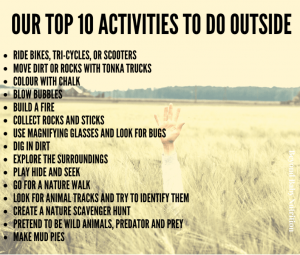
Nothing makes me happier than taking my kids outside. With social distancing being at the forefront of everyone’s mind, being outside has gotten slightly trickier but NOT IMPOSSIBLE!

The key to being outside is….. Stick with your family.

Play dates, a good ol’game of shinny with the neighbour kids is out. So what’s left? And where exactly can you go?

The good news is you can go pretty much anywhere you want (right now), so long as you’re trying to stay at least 6 feet away from other people. This means running, going for a bike ride or a stroll on a path isn’t out of the question.

Not interested in venturing that far out? No problem, check out these 50 Fun Things to Do Outside with Kids as a Family from Very Well Family.

Virtual field trips

So many INCREDIBLE places around that world have opened up virtual doors for us to explore from the comfort of our own home. Here’s a great link I found from Adventures in Familyhood that lists 20 different virtual tours.

Educational Apps, Websites & Print-Outs

This…. this is where things can get a little overwhelming, at least for me! So many resources exist online to help make learning fun and easy to access for kids of all ages.

Worried about limiting screen time? I hear ya! We’re not a huge screen time family, BUT you need to do what you need to do to get through each day.

So here they are a few links:

So many more options

This definitely isn’t an exhaustive list, but it’s a start. If you’ve been using any other resources, or you’ve created some yourself that you’d love to share we would be so grateful and thrilled to add them to our list!!

If you’ve found this helpful, please comment below AND share, share, share!!

~Lacey

Lacey Engel is a Registered Dietitian and owner of Beyond Baby Nutrition. She works with families of picky eaters to help them fix meal times for good. Lacey strongly believes that HOW
you deal with picky eating has HUGE and lasting impacts on how your kids eat for the rest of their life. There isn’t bad food, but there is a bad way to teach kids to learn to love and eat food. To learn how to help your kids develop a healthy relationship with food, visit beyondbabynutrition.com

Pork Green Arepas

Have you ever tried arepas? Arepas are a classic South American dish which are gaining in popularity in North America. These beautiful little corn pockets are filled with adobo pork, black beans, guacamole crema, cucumber, ricotta cheese and topped with green onion. This super easy and exotic dish is an amazing week night super.  

Featured local products

You will need

Preparation

1

Prepare the arepas:  Preheat the oven to 350F. In a bowl, add 1 1/2 cup(2p), 3 cups (4p), 4 1/2 cups(6p) of warm water. Season with salt (1/2 tsp(2p), 1 tsp(4p), 1 1/2 tsp(6p)). Slowly add maserepa. Combine.

You are looking for a dough that doesn’t easily stick to your hands, is moldable, moist and can be rolled into a ball.

Cover with a towel. Let sit for 5 minutes.

Want see how areapas are made?
Watch this video from Minimalist Baker to see the perfect texture of the dough and how to form the arepas:

2

Prepare the garnish: Wash and rinse all produce.

Cut green onion and cucumber in thin slices.

Cut the
onion in small dice.

3

Form & pan fry the arepas: Separate the dough in balls (3 per portion). Carefully press the ball between wet palms to form into a roughly 1/2-inch thick disc*.

Heat a drizzle of oil in a pan on medium heat. Ensure the arepas do not touch. Cook for 3-4 minutes per side.

*Note: A little cracking is normal. You can close the cracks by patting the edge with wet hands.

4

Bake & cut the arepas:  Transfer the arepas to a lined baking sheet.  Bake for 20 minutes.

Let the arepas cool for 5 minutes.

Slice the arepa 3/4 of the way around, leaving a seam on the edge to easily stuff them.

5

Make the filling:  Heat a drizzle of oil in a pan on medium heat. Add the onion and the ground pork and onion diced. Cook 8 minutes*. 

Rince the black beans in a colander.

Add the 
adobo spice, black beans and 1/4 cup(2p),  1/2 cup(4p), 1 3/4 cup(6p) water. Cook for 3-5 minutes until a sauce is formed.

Note: Ensure ground pork is cooked to at least 165°F

6

Fill, garnish and serve: Fill each aerepa with the filling, guacamole crema and cucumber slices. Garnish each aerepa with ricotta and green onion*.

*Note: Arepas are very filling.

In my kit:

Included

2 portions

4 portions

6 portions

masarepas

1 1/2 cups

3 cups

4 1/2 cups

onion

1 small

1 medium

1 large

ground pork

150 gr

300 gr

450 gr

black beans

1/2 cup

1 cup

1 1/2 cup

green onion

1

2

3

Adobo spice

1 tsp

2 tsp

3 tsp

Ricotta

2 tbsp

1/4 cup

1/3 cup

mini cucumber

1

1

1

guacamole crema

3 tbsp

1/3 cup

1/2 cup

Recommended Wine Pairing

STERLING VINTNER’S PINOT NOIR 
Deep ruby colour; red cherry, earthy and vanilla aromas; light to medium bodied, dry; raspberry and cherry flavours with a nice touch of spice on the finish
Region: California
Colour:
Red
Alcohol: 13.5%
Price
(SLGA): $14.62

PELEE ISLAND GEWURZTRAMINER
Pale straw/yellow colour; floral, ripe peach, honey and lychee fruit aromas; off-dry, light to medium bodied, softly structured with balanced acidity, flavours of honeysuckle, rose water, pear, citrus and lychee; hints of spice on the finish.
Region: Canada
Colour: White
Alcohol:
12.5%
Price (SLGA): $12.99

Health Fact

Regina Naturopathic

Dr Craig Herrington, Naturopath

BLACK BEANS 
Black beans are a nutritional powerhouse high in fibre, iron, phosphorus, potassium, calcium, magnesium, selenium, manganese, copper and zinc. Who needs a multivitamin!

Cooking with Kids

Beyond Baby Nutrition

Lacey Engel, Registred Dietician

Yum foods 
Serve “yum” foods with new food. When your child sees food they recognize it may entice them to explore other, new foods too.

Cooking for kids?
Go easy on the adobo spice blend as kids may not like it’s spicy flavour.

Making this recipe with kids?
Ask the child to help by completing step 5 & 6:

  • Assemble
  • Garnish & Serve

Tags

Note: We cannot guarantee any dish is allergen free. 

Weight Watchers Smart Points

Nutritional Information

Orange Vegetable Stir-Fry

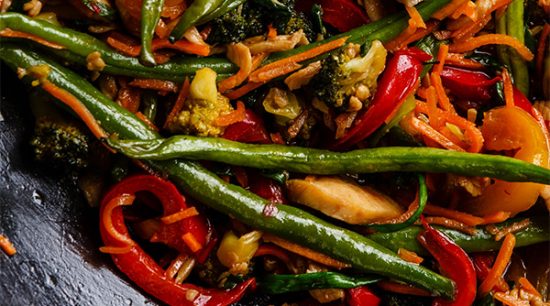
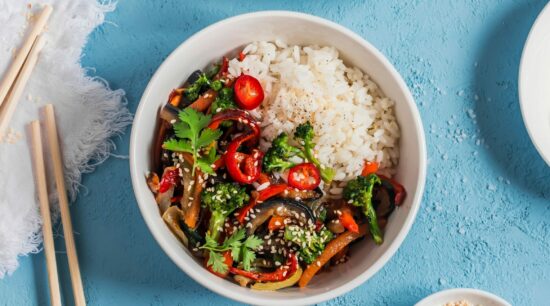
Take out your chopsticks, find a good movie on Netflix and get ready for all the satisfaction of orange stir-fry take out and none of the guilt! This orange stir-fry satisfies even the strongest craving for takeout. This dish is super easy and is filled with broccoli, bell pepper, crispy tofu and green beans. The orange stir-fry sauce is filled with sweet orange juice, savoury soy sauce, fresh ginger and nutty sesame oil.

Featured Saskatchewan Products

You Will Need

Preparation

1

Prepare and cook the rice:  In the sink, place the rice in a strainer and rinse it well. In a pot, add the brown rice, water (1 1/2 cups,  3 cups, 4 1/2 cups), salt (1/8 tsp, 1/4 tsp, 1/2 tsp) and pepper (1 pinch, 1/8 tsp, 1/4 tsp) and stir. Bring to a boil on high heat. Reduce the heat to low, cover and cook 25 minutes or until the water is absorbed and the rice is tender. 

2

Preparation: Wash and dry the vegetables. Cut the broccoli* in bite size florets. Cut the bell pepper in 1/2 cm thick slices.  Cut the ends of the green beans.

*Note: Get the stink outta here! Broccoli can have a strong smell. To minimize the smell, open the bag under running cold water. This will minimize the smell and rinse your broccoli at the same time. 

3

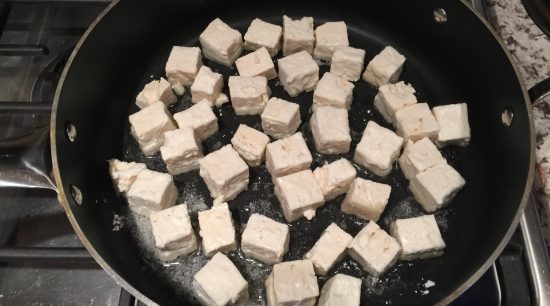
Cook the tofu: Drain the tofu. On a cutting board, cut the tofu in 2 cm dices. Place the cornstarch on a plate with salt (1/8 tsp, 1 pinch, 1/2 tsp) . Combine the cornstarch and salt. Place a few tofu dice on the cornstarch mixture and coat each tofu dice with cornstarch. Heat the oil (1/2 tsp, 1 tsp, 1 1/2 tsp), in a large pan or pot on medium heat. Place the cornstarch coated tofu dice in the pan or pot. Cook about 2 minutes per side on medium heat. Place the cooked tofu aside in a small bowl.

4

Prepare the stir fry: In a pan, add oil (1/2 tsp, 1 tsp, 1 1/2 tsp), bell peppers. Cook on medium heat for about 3 minutes. Add the orange stir fry sauce and the broccoli. Cook on medium/high heat for about 2 minutes. Add the green beans and cook for an additional 2 to 5 minutes or until the sauce thickens and the vegetables are cooked but still crunchy.

5

Prepare the garnish, assemble and serve:  Separate the leaves of the cliantro. 

Serve in individual plates by placing the rice at the bottom of the plate and topping it with the vegetables. Garnish with cilantro.

Ingredients

Included

2 Portions

4 Portions

6 Portions

brown rice

2/3 cup

1 1/3 cup

2 cup

tofu

175 gr

350 gr

525 gr

cornstarch

1 tbsp

2 tbsp

3 tbsp

orange stir fry sauce

1/2 cup

1 cup

1 1/2 cup

bell pepper

1

2

3

broccoli

100 gr

200 gr

300 gr

green beans

75 gr

150 gr

225 gr

cilantro

3 gr

6 gr

9 gr

Health fact

Regina Naturopathic

Dr. Craig Herrington, Nathuropath

BROCCOLI
Broccoli contains a powerful compound called sulforaphane. Recent research found that sulforaphane has the potential to slow the progression of Alzheimer’s and Parkinson’s disease. 

Cooking with Kids

Beyond Baby Nutrition

Lacey Engel, Registered Dietician

Yum foods
Serve ”Yum” foods with new foods. When your child sees food they recognize it may entice them to explore other new foods. For example, this dish may be served with plum sauce.

Cooking for kids?
Feel free to slowly introduce new vegetables to children.

Making this recipe with kids?
Ask the child to help by completing step 4 and 5.

  • Prepare the stir fry
  • Prepare the garnish, assemble and serve

Wine Pairings

STERLING VINTNER’S PINOT NOIR 
Deep ruby colour; red cherry, earthy and vanilla aromas; light to medium bodied, dry; raspberry and cherry flavours with a nice touch of spice on the finish
Region: California
Colour: 
Red
Alcohol: 13.5%
Price
 (SLGA): $14.62

Deinhard green label Riesling 
Pale straw colour; apple, melon and citrus with mineral notes on the nose; soft, off-dry wine with low alcohol and fruity flavours
Region: Germany
Colour: White
Alcohol:
10.0%
Price (SLGA): $14.02

Tags

Note: We cannot guarantee any dish is allergen free. 

Weight Watchers Smart Points

Nutritional Information

6 raisons surprenantes qui nous encouragent à manger le déjeuner

Le déjeuner est le repas le plus souvent sauté par les Canadiens. Dans une étude pancanadienne, la raison la plus courante de l’ignorer serait le manque de temps. 

Beaucoup sous-estiment la valeur d’un déjeuner équilibré. Avec le rythme de vie rapide et la popularité croissante du jeûne intermittent, le déjeuner est le repas qui ne reçoit pas l’attention qu’il mérite ou qui est trop souvent complètement ignoré.

La plupart des professionnels de la santé sont d’accord : le déjeuner est essentiel pour avoir un mode de vie sain. 

Les grains entiers, les protéines, les fruits et légumes et les bons gras sont tous des composantes d’un déjeuner équilibré. Personne ne devrait commencer sa journée sans un bon déjeuner ! Voici six raisons qui vous permettent d’apprécier quotidiennement votre premier repas du matin.   

Le déjeuner est un repas facile qui peut être non seulement préparé et mangé en quelques minutes mais qui a aussi l’avantage d’offrir de nombreuses heures de productivité.

6 raisons surprenantes qui nous encouragent à manger le déjeuner
1. Soutien la santé du cerveau

Les glucides sont essentiels au bon fonctionnement du cerveau. Un certain nombre d’études montrent que les enfants qui déjeunent ont généralement de meilleures capacités cognitives et réussissent mieux à l’école. Manger un déjeuner équilibré et riche en fibres favorise la mémoire et la concentration, améliore l’humeur et réduit le stress. Qui ne veut pas de ça ? Il n’y a pas de meilleur moment que le déjeuner pour permettre à nos glucides de se régénérer. Les glucides riches en fibres se retrouvent dans l’avoine, le pain de grains entiers et les fruits.

2. Maintenir un poids santé

Parfois, nous pouvons être tentés de sauter le déjeuner pour éviter de manger des calories supplémentaires. Cependant, sauter le déjeuner pour perdre quelques kilos est une très mauvaise idée. Manger le déjeuner envoi le message à notre corps que nous ne sommes pas en mode famine et que nous mangerons à nouveau au cours de la journée. La prise du déjeuner permet de démarrer notre métabolisme et nous aide à brûler plus de calories tout au long de la journée.

 Des études ont démontré que la consommation d’un déjeuner nutritif et riche en fibres diminue considérablement la faim et les fringales tout au long de la journée. Les enfants qui sautent le déjeuner ont tendance à avoir un indice de masse corporelle (IMC) plus élevé et sont susceptibles d’être en surpoids que ceux qui mangent le petit déjeuner régulièrement. Manger trois repas équilibrés par jour contribue à maintenir un poids santé. 

3. Passer du temps en famille

Nous discutons souvent de l’importance de manger en famille. Le déjeuner est une merveilleuse occasion de commencer la journée en famille autour de la table. Êtes-vous prêt pour votre jeu de volley-ball ? Qu’est-ce qui vous rend enthousiaste aujourd’hui ? Cette opportunité vous permet de profiter des premières heures de la journée pour passer du temps de qualité en famille.

 Vous pensez que vous n’aurez pas le temps ? Pas d’excuses ! Programmez votre réveille-matin quelques minutes plus tôt et donner vous le temps de créer des souvenirs mémorables avec ceux que vous aimez.

4. Ignorez ce sentiment de faim qui survient dans l’après-midi

Sauter le déjeuner a un impact significatif sur la qualité de la journée que vous aurez. Avez-vous déjà eu ce sentiment de faim pendant l’après-midi ?  Si oui, il y a de fortes chances que vous remarquiez une corrélation entre le fait de sauter ou de manger un déjeuner déséquilibré et la sensation de faim qui vient pendant l’après-midi.

Un déjeuner équilibré est rempli de fibres ce qui a pour effet de contribuer à stabiliser la glycémie. Les baisses de sucre peuvent provoquer un certain nombre de symptômes tels que : la difficulté à se concentrer, les maux de tête, les fringales d’aliments sucrés et une diminution de votre patience.  Essayez-le ! Demain matin, prenez le temps de manger un déjeuner équilibré et observez comment vous vous sentez tout au long de la journée.

Balanced breakfast are filled with fibers which contribute to stabilize blood sugar. Sugar drops cause a number of symptoms: difficulty concentrating, head aches, sugar cravings, and low patience.  Test it out! Tomorrow morning, treat yourself to a balanced breakfast and see how you feel throughout the day. 

5. Réduisez le grignotage

La sensation de faim pendant l’après-midi est souvent associée à des envies. Le manque de nutriments apporté par un déjeuner équilibré fini toujours par nous rattraper. En sautant le déjeuner, il est fort probable que vous ayez envie de manger des frites ou des gâteaux pendant l’après-midi ou le soir. 

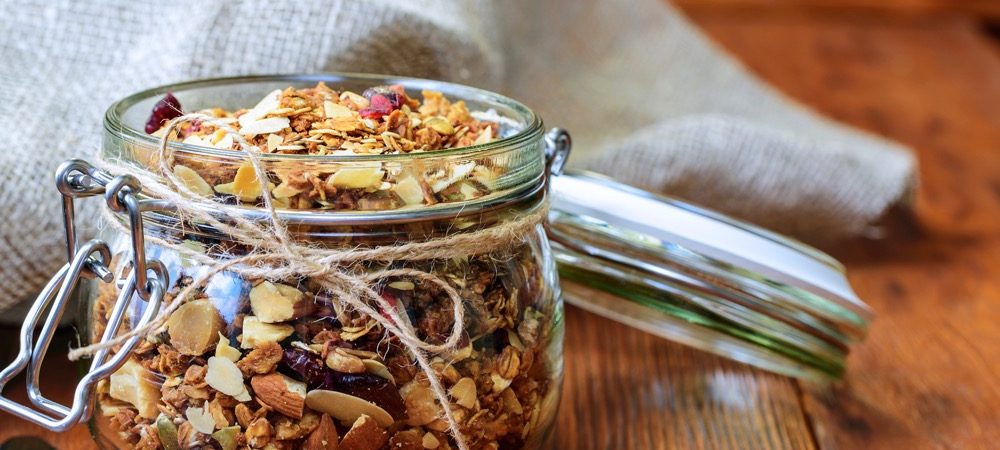
Pour éviter d’avoir ces envies, assurez-vous d’avoir un déjeuner équilibré riche en fibres et en protéines. Lorsque vous avez une matinée mouvementée, planifiez un déjeuner super rapide que vous pourrez manger sur le chemin du travail ou à votre bureau. Un exemple de déjeuner super rapide est le gruau sans cuisson.  Vous pouvez le préparer quelques jours à l’avance ce qui vous permet de l’emporter rapidement le matin.  En bas de ce blog, vous trouverez un document PDF de recette de déjeuner GRATUIT qui inclus un certain nombre de recettes de gruau sans cuisson.


6. Développer des saines habitudes de vie

La plupart des professionnels de la santé recommandent de manger plus de fruits et de légumes. Le petit déjeuner est une bonne occasion d’ajouter des fruits et des légumes à votre alimentation et de maintenir un style de vie sain.

 Livre de recettes de déjeuner GRATUIT

Lorsque nous sommes en congé, nous pouvons passer plus de temps avec nos proches pour préparer un déjeuner plus élaboré, rempli de légumes et de fruits. Voici quelques exemples pour un déjeuner plus élaboré : une omelette, des frittatas, des crêpes aux myrtilles et des burritos.

Êtes-vous tanné d’avoir faim pendant l’après-midi ?

Vous souhaitez optimiser votre niveau de productivité tout au long de la journée ?

ZestyKits est là ! Voici des recettes de déjeuners super faciles et rapides à faire qui peuvent être assemblés quelques jours à l’avance. Ces déjeuners sont si faciles et délicieux que vous ne voudrez même plus sauter le déjeuner. Téléchargez ce document PDF gratuitement pour découvrir à quel point votre prochain déjeuner sera facile à faire.

joyeux déjeuner!

More Blogs

Preventive Measures For COVID-19

As COVID-19 (coronavirus) continues to impact the global community and to take up more space in the media, I wanted to personally keep you informed of the steps we are taking at ZestyKits to mitigate the impacts of this situation on our employees and customers.

As of March 12th, our production employees have received additional hygiene instructions which were immediately applied as part of a special occupational health and safety training. 

The measures put in place include, but are not limited to:

  • Continue to use Saskatchewan ingredients as much as possible to minimize the number of people in the food chain and, as a result, minimize risk.
  • In collaboration with our health team, we are building a menu that will contribute to support wellness.
  • The employee’s temperature will be taken upon arriving at work.
  • The temperature of the employees that prepared your box will be included on your box starting on deliveries of March 21st.
  • All employees involved in food preparation are wearing masks and gloves. 
  • Employees who have traveled abroad will stay at home for a 14-day period, as will employees who have family members with flu-like symptoms.  
  • All employees with flu-like symptoms such as cough, fever, difficulty breathing, cold, etc. will stay at home.
  • Although our handwashing policy was already robust, we have strengthened it by increasing the number of mandatory handwashes for all employees.  
  • Additional sanitation and disinfection measures have been implemented. 

The FDA informs there is no evidence to suggest food can transmit COVID-19   –  as was the case for SARS and MERS.

Although we are all in an unprecedented situation that is constantly subject to change, please rest assured that we are committed to continuing our operations and ensuring that you receive the highest quality service possible, as usual.

Thank you for your support,

Annie Beaudoin & Catherine Beaudoin
Co-Founders, ZestyKits